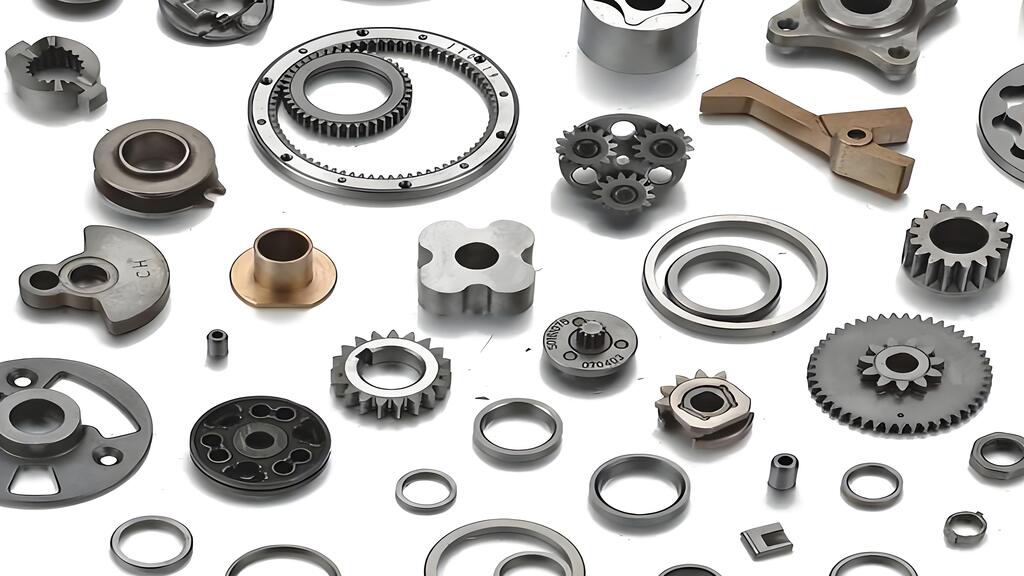


Applications of Powder Metallurgy in the Automotive Industry
Powder Metallurgy in the Automotive Industry drives innovation by enabling the production of high-precision, durable components for engines, transmissions, and braking systems. Approximately 80% of all structural powder metallurgy parts produced worldwide serve automotive applications, reflecting its essential role.
- Manufacturers increasingly rely on Sintering, soldering, and additive manufacturing with metal powders to create lightweight, efficient parts.
- Sustainability gains, such as reduced material waste and energy consumption, encourage broader adoption as automakers seek both performance and environmental benefits.
Key Takeaways
- Powder metallurgy produces strong, precise automotive parts with minimal waste, supporting lightweight and complex designs.
- The process saves energy and materials, making it cost-effective and environmentally friendly for mass production.
- It enables the creation of key components like engine parts, gears, brakes, and electrical sensors with high durability and performance.
- Advanced materials and manufacturing techniques improve part strength, wear resistance, and support electric vehicle development.
- Powder metallurgy drives innovation and sustainability in the automotive industry, helping meet future demands for efficiency and lower emissions.
Overview of Powder Metallurgy in the Automotive Industry
Definition and Basic Principles
Powder Metallurgy in the Automotive Industry refers to a manufacturing process that transforms metal powders into solid automotive components. This method relies on several fundamental steps:
- Powder preparation involves producing metal powders with specific properties.
- Blending combines these powders with additives to achieve the desired composition.
- Compacting shapes the blended powders under high pressure, forming a "green" part.
- Sintering heats the compacted part just below its melting point, bonding the particles into a strong, dense structure.
- Secondary operations, such as heat treatment or machining, further enhance the properties of the final component.
Note: Sintering is a critical stage. It enables solid-state diffusion, which strengthens the part and improves its durability.
The process supports mass production of high-performance parts like gears, bearings, and connecting rods. Manufacturers benefit from reduced machining, high material utilization, and the ability to create complex, lightweight parts with excellent wear and corrosion resistance.
| Principle/Characteristic | Explanation |
|---|---|
| Particle Compaction and Initial Bonding | Metal powders are compacted under high pressure to form a green part with mechanical bonds and preliminary density. |
| Sintering and Particle Bonding | Heating near but below the melting point enables solid-state diffusion, forming strong metallic bonds and increasing density and strength. |
| Microstructure Reorganization | Recrystallization during sintering refines microstructure, improving tensile strength, hardness, and stability. |
| High Material Utilization | Over 95% material utilization with minimal waste, making the process eco-friendly. |
| Ability to Create Complex Shapes | Enables the production of intricate geometries difficult to achieve by traditional methods. |
| Versatile Material Options | Wide range of powders (iron-based, stainless steel, copper-based, alloys) to meet diverse application needs. |
| Cost-Effectiveness for Mass Production | Economical for large-scale production with consistent quality. |
| Automotive Applications | Used for high-precision parts like gears, bearings, and connecting rods with minimal waste and consistent quality. |
| Eco-Friendly and Sustainable | Supports sustainable development through efficient resource use and low emissions. |
Key Processes Used
Manufacturers use several key processes to produce automotive parts through powder metallurgy:
- Powder production uses atomization, chemical reduction, or mechanical comminution to create metal powders.
- Blending and pressing mix powders with additives and compacting them into green compacts.
- Sintering heats these compacts below their melting point, bonding the particles. Methods include vacuum sintering, hot pressing, and pressureless sintering.
- Optional processes, such as heat treatment or infiltration, improve mechanical properties or density.
These processes allow the industry to produce a wide range of automotive components, including engine parts, transmission gears, brake system elements, and structural components. Powder Metallurgy in the Automotive Industry enables efficient, precise, and sustainable manufacturing, supporting the sector’s ongoing innovation.
Automotive Components Produced by Powder Metallurgy
Engine Components
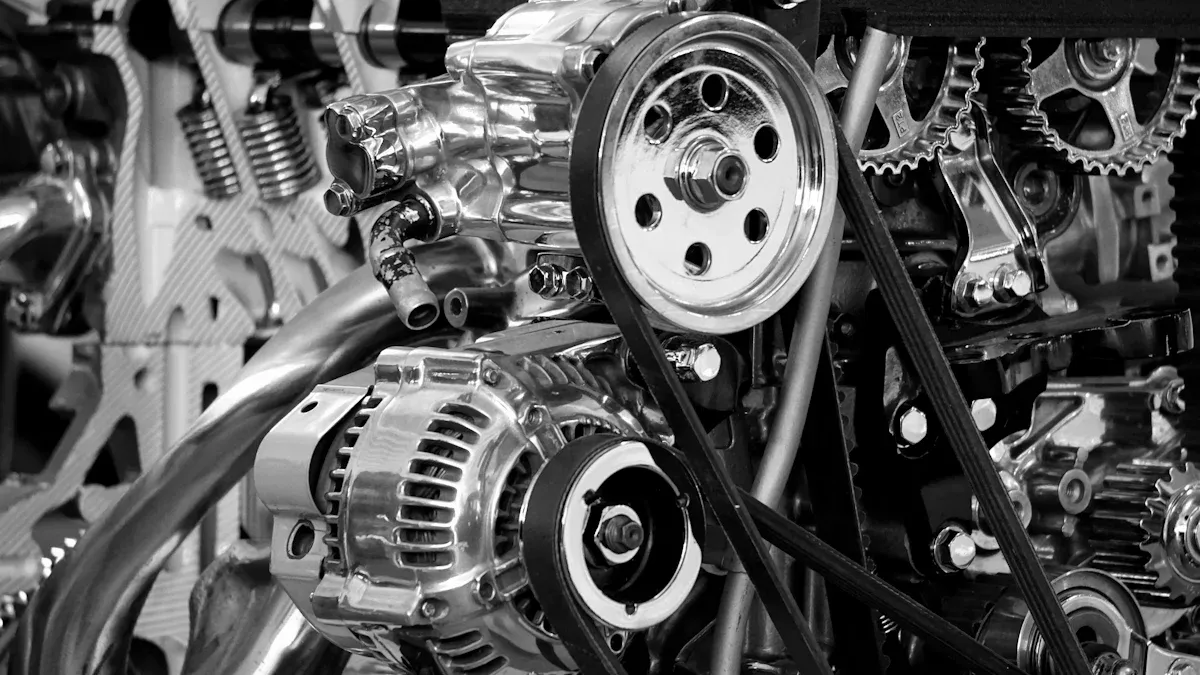
Automotive manufacturers rely on powder metallurgy to produce a wide range of engine components. This approach enables the creation of parts with complex shapes, high strength, and excellent wear resistance. The process supports the production of both structural and functional engine elements, ensuring reliable performance under demanding conditions.
Key engine components produced using powder metallurgy include:
- Valve seat inserts
- Valve guides
- PM lobes for assembled camshafts
- Balancer gears
- Main bearing caps
- Engine manifold actuators
- Camshaft bearing caps
- Engine management sensor rings
Engineers also use powder metallurgy to manufacture gears with intricate geometries, bearings with self-lubricating properties, and pistons designed for high strength and durability. These parts benefit from precise control over material composition, allowing tailored performance for specific engine requirements.
Powder metallurgy offers several performance advantages over traditional manufacturing methods:
- Accurate control of material properties enables custom solutions for strength, corrosion resistance, and thermal conductivity.
- The process produces net-shape components with tight tolerances, reducing the need for additional machining.
- Sintering technology increases density, resulting in improved strength and durability.
- The uniform microstructure of powder metallurgy parts enhances wear resistance and dimensional stability.
- Lightweight yet strong components contribute to overall vehicle efficiency.
Note: Powder Metallurgy in the Automotive Industry enables the production of engine parts that meet strict quality and performance standards, supporting innovation in modern powertrains.
Transmission and Drivetrain Parts
Transmission and drivetrain systems demand components with high precision, strength, and wear resistance. Powder metallurgy meets these requirements by enabling the efficient production of complex parts with consistent quality. The process supports the creation of gears, bearings, and other drivetrain elements that operate reliably under high loads and varying temperatures.
| Part Type | Common Applications | Key Features and Advantages |
|---|---|---|
| Gears (Spur, Helical, Bevel, Internal) | Automotive transmission, power tools, and industrial machinery | High precision, wear resistance, durability, ability to form complex shapes, impact resistance, quiet operation |
| Bearings | Automotive drivetrain | High strength, wear resistance, uniform material structure |
| Clutches | Automotive powertrain | High precision, durability, and improved transmission efficiency |
| Gear Shafts | Automotive and motorcycle | High load resistance, smooth power transfer, uniform material structure |
| Sprocket Wheels | Chain drive systems in automotive | Excellent wear resistance, impact strength, and dimensional precision |
| Timing Belt Pulleys | Synchronous drive systems in engines | High strength, wear resistance, stable dimensional precision, reliable operation under high stress |
Powder metallurgy enhances the durability of these components through several mechanisms:
- The inherent porosity of powder metal gears dampens noise and vibration, reducing operational stresses and extending component life.
- Precise control over gear geometry and material properties ensures consistent quality and high wear resistance.
- Design flexibility allows optimized tooth and spline shapes, improving load distribution and reducing friction.
- Powder metal gears are lighter than solid steel, reducing stress on drivetrain components and improving efficiency.
- Rigorous testing and quality control guarantee reliability under demanding conditions.
Tip: The ability to produce lightweight, high-strength parts with complex geometries makes powder metallurgy a preferred choice for modern transmission and drivetrain systems.
Braking System Elements
Braking systems require components that deliver consistent performance, safety, and durability. Powder metallurgy plays a vital role in manufacturing key braking elements, especially in advanced safety systems.
Manufacturers commonly use powder metallurgy to produce ABS (anti-lock braking system) speed sensor rings. These rings help prevent wheel lockup and skidding during braking, ensuring vehicle safety. The process guarantees high quality and longevity for these critical components. Powder metallurgy also supports the production of gear sets for electric parking brakes, where motor-related parts must meet strict performance and durability standards.
Recent research highlights the benefits of powder metallurgy in brake pads and friction materials. The transition from asbestos to powder metallurgy-based materials has improved safety, wear resistance, and friction stability. Composite designs using phenolic resin binders and advanced fillers achieve reliable braking torque and long service life. Tribological tests show that powder metallurgy composites with hBN-based lubricants significantly reduce wear rates compared to conventional materials. For example, hBN-based pins exhibit a 38.49% lower wear rate than graphite-based pins, and laser-clad alloy discs paired with these composites show up to 63.76% improved wear resistance.
Copper-based powder metallurgy composites with sepiolite further enhance mechanical properties, friction stability, and wear resistance at high speeds and temperatures. These improvements support safe and reliable braking, even under extreme conditions.
Safety Note: Powder metallurgy enables the production of braking system elements that combine high performance, durability, and environmental benefits, supporting the evolution of safer vehicles.
Fuel System Components
Automotive fuel systems require components that deliver precise performance and long-term reliability. Powder metallurgy enables manufacturers to produce fuel system parts with complex shapes and tight tolerances, supporting efficient fuel delivery and emission control.
Common fuel system components produced using powder metallurgy include:
- Oil pump gears
- Engine manifold actuators
- Engine management sensor rings
These parts must withstand harsh operating environments, including exposure to fuel, heat, and vibration. Powder metallurgy allows engineers to tailor material properties for optimal wear resistance and strength. The process also supports the integration of multiple functions into a single component, reducing assembly steps and potential failure points.
Powder metallurgy contributes to the efficiency and emissions performance of automotive fuel system components in several ways:
| Aspect | Powder Metallurgy (PM) | Conventional Processes (Casting, Forging, Machining) |
|---|---|---|
| Raw Material Utilization | Over 95% (very high efficiency) | Significantly lower due to machining waste |
| Energy Consumption | About 43% of forging/machining | 100% baseline energy consumption |
Manufacturers achieve high raw material utilization, minimizing waste and reducing the need for secondary machining. Energy consumption in powder metallurgy production is significantly lower than in traditional forging or machining. Lightweight, high-strength powder metal parts can reduce vehicle weight by about 10%, which improves fuel economy by 6–8% and lowers CO2 emissions. The process also supports sustainability by recycling materials and enabling complex, integrated designs that enhance durability and reduce assembly time.
Tip: Powder metallurgy helps automakers meet strict emissions standards and efficiency targets by delivering lightweight, durable, and precisely engineered fuel system components.
Chassis and Structural Parts
Chassis and structural parts form the backbone of every vehicle, providing support, stability, and safety. Powder metallurgy offers unique advantages for manufacturing these critical components.
Manufacturers use powder metallurgy to produce:
- Structural brackets for mounting components to the car body
- Engine mounting brackets that support the engine and reduce vibrations
- Chassis components that reinforce the frame and provide structural stability
- Hinges and supports for doors and hoods
These parts benefit from the near-net shape forming capability of powder metallurgy, which delivers high dimensional precision and reduces or eliminates the need for finishing operations. The process ensures excellent chemical homogeneity, resulting in a uniform microstructure and elevated internal strength. Powder metallurgy components also possess sound and vibration-damping properties, which are especially valuable for chassis and structural applications.
Additional mechanical property advantages include:
- Minimal internal stresses and defects, enhancing mechanical reliability
- Flexibility in material composition and complex shapes, improving mechanical performance compared to conventionally machined parts
Engineers can design lighter, stronger, and more reliable chassis and structural parts using powder metallurgy. This approach supports vehicle safety and performance while reducing manufacturing costs and environmental impact.
Note: Powder Metallurgy in the Automotive Industry enables the production of advanced chassis and structural parts that meet modern demands for safety, efficiency, and sustainability.
Electrical and Sensor Applications
Modern vehicles rely on a wide range of electrical and sensor components for control, safety, and efficiency. Powder metallurgy plays a crucial role in producing these parts, especially as vehicles become more electrified and automated.
Key electrical and sensor components manufactured using powder metallurgy include:
- Electromagnetic components such as linear actuators, e-drive traction motors, and electric pumps using soft magnetic composites (SMCs)
- By-wire system components, including steer-by-wire, shift-by-wire, and brake-by-wire applications
- Planetary gearboxes in brake-by-wire systems, converting electric motor rotation into axial clamping force for brake discs
- Planetary gearbox actuators in shift-by-wire systems for gear shifting in hybrid transmissions
- Electrical contacts, relays, and contact brushes made from copper-based and tungsten-based alloys
- Rotors and stators in alternators and generators using SMCs
- ABS sensor rings and pump angle sensors
- Components in electric motors and transformers
Powder metallurgy improves the performance and reliability of these applications by enabling the production of complex geometries and internal structures, such as lattice and hollow components. The process integrates with technologies like 3D printing and machining to create hybrid components with enhanced properties. Engineers use powder metallurgy to produce components for electric vehicles, including battery and motor parts, as well as lightweight structures.
Additional benefits include:
- Enhanced mechanical, thermal, and electrical properties through nanostructured powders and advanced alloy compositions
- Superior magnetic performance and energy efficiency in motors, transformers, and sensors due to soft magnetic sintered components
- Precise motion control in actuator parts, which is critical for reliability in automotive systems
Powder metallurgy supports the development of advanced electrical and sensor systems, making vehicles safer, more efficient, and better suited for future mobility trends.
Callout: As automotive technology evolves, powder metallurgy continues to drive innovation in electrical and sensor applications, supporting the shift toward electrification and automation.
Key Materials in Powder Metallurgy for Automotive Applications

Iron and Steel Alloys
Iron and steel alloys form the backbone of automotive powder metallurgy. Manufacturers select these materials for their balance of strength, durability, and cost-effectiveness. Iron-based alloy powders often include iron-nickel, iron-copper, iron-molybdenum, and stainless steel. These alloys deliver high strength, good ductility, and excellent wear resistance. Stainless steel variants add corrosion and oxidation resistance, making them ideal for harsh environments.
| Alloy Type | Key Properties | Automotive Applications |
|---|---|---|
| Iron-Based Alloys | Mechanical strength, durability, wear resistance, heat treatability, cost-effective, and customizable | Gears, camshaft pulleys, sprockets, drivetrain components, brake parts |
| Stainless Steel | Corrosion and oxidation resistance, mechanical strength, ductility, high-temp suitability | Components exposed to harsh environments, high-temp parts |
Powder metallurgy steels, such as iron-copper and iron-nickel alloys, show finer microstructures and smaller carbides than traditional steels. This results in higher toughness and improved fatigue life, which is critical for gears and bearings. The process also allows for complex shapes and tight tolerances, enhancing efficiency and material utilization.
Copper-Based Materials
Copper-based materials play a vital role in automotive powder metallurgy. Engineers use copper and its alloys in clutches, brakes, and other friction materials. By combining copper with lubricants and wear-resistant additives, these parts withstand higher loads and temperatures than organic alternatives. This improves durability and performance in demanding automotive settings.
Copper powders also support the production of high-precision components for batteries, motors, and heat exchangers. As electric and hybrid vehicles become more common, demand for copper-based parts rises due to their excellent electrical conductivity and mechanical strength. Manufacturers can create complex shapes with superior properties, essential for modern automotive applications.
Tip: Copper-base friction materials, often blended with tin, lead, graphite, and other additives, perform well in both wet and dry clutch and brake systems.
Aluminum Alloys
Aluminum alloys contribute significantly to lightweighting in automotive powder metallurgy. Decades of use have proven the value of alloys like Al-4%Cu in structural parts such as camshaft caps. This alloy provides yield strength near 160 MPa and tensile strength around 200 MPa, making it suitable for demanding applications.
- PM aluminum alloys enable at least 50% mass reduction compared to steel or cast parts.
- Near-net shape forming reduces material waste and energy use.
- Advanced alloys, such as PM Al-Si-Mg-Fe, achieve tensile strengths up to 291 MPa and ductility of 17%.
- Nanoprecipitation hardening phases and optimized microstructures prevent brittleness and enhance strength.
These properties allow aluminum powder metallurgy components to meet the automotive industry's lightweighting and performance goals.
Advanced and Specialty Materials
Automotive manufacturers increasingly turn to advanced and specialty materials in powder metallurgy to meet the demands of modern vehicles. These materials help engineers design components that combine strength, durability, and efficiency. The use of advanced materials also supports the industry’s shift toward greener and more cost-effective manufacturing.
Key advanced and specialty materials include:
- Steel: Delivers high strength and corrosion resistance. Engineers use steel for gears, bearings, pistons, and exhaust systems. Its thermal properties make it ideal for parts exposed to high temperatures.
- Titanium: Offers a lightweight solution with exceptional strength and corrosion resistance. Titanium parts improve fuel efficiency and help reduce vehicle emissions.
- Copper: Provides excellent thermal and electrical conductivity. Manufacturers use copper in specialized components such as sensor rings and electrical contacts.
- Aluminum Alloys: Combine low weight with good strength-to-weight ratios and corrosion resistance. These alloys enhance fuel efficiency and support lightweight vehicle designs.
- High-frequency inorganic-coated soft magnetic composites (SMC): Enable the production of soft magnetic parts with improved magnetic properties. These materials are essential for electric motors and sensors in modern vehicles.
- Iron-silicon soft magnetic materials: Offer low-frequency magnetic insulation and improved magnetic performance. They play a key role in automotive electrical components.
| Advanced/Specialty Material | Unique Benefits in Automotive Powder Metallurgy |
|---|---|
| Steel | High strength, corrosion resistance, thermal properties, suitable for gears, bearings, pistons, and exhaust systems |
| Titanium | Lightweight, high-strength, corrosion-resistant, improves fuel efficiency, and reduces emissions |
| Copper | Good thermal and electrical conductivity, used in specialized components |
| Aluminum Alloys | Lightweight, good strength-to-weight ratio, corrosion resistance, enhances fuel efficiency |
| SMC | Improved magnetic properties for electric motors and sensors |
| Iron-silicon Materials | Magnetic insulation improves the performance for electrical components |
Powder metallurgy allows the production of complex parts such as shock absorbers, gears, sensor rings, and pulleys. These sintered components meet strict quality standards and support faster, more efficient manufacturing. The process reduces waste and offers greater design flexibility. As a result, automakers achieve better cost structures and align with goals for greener, more efficient vehicles.
Note: The adoption of advanced and specialty materials in powder metallurgy drives innovation in automotive engineering, supporting the development of high-performance, sustainable vehicles.
Advantages of Powder Metallurgy in the Automotive Industry
Cost Savings and Efficiency
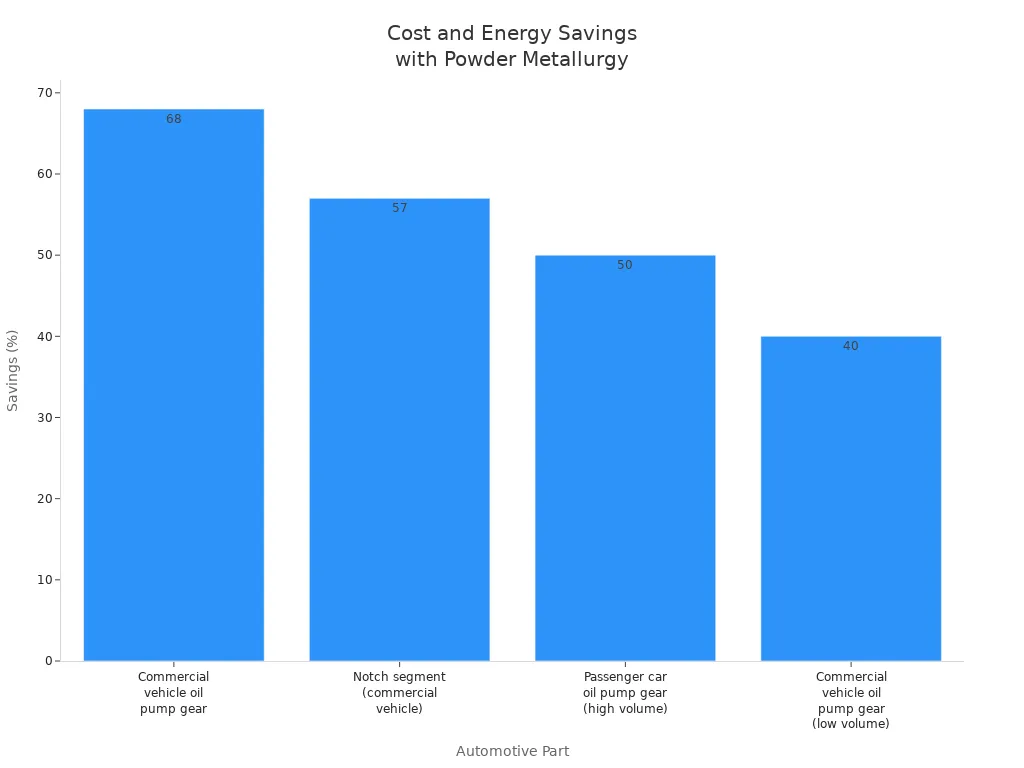
Automotive manufacturers achieve significant cost savings by adopting powder metallurgy. The process reduces both material and energy expenses, especially when compared to traditional machining or forging. For example, producing a commercial vehicle oil pump gear with powder metallurgy can save up to 68% in costs compared to machining. Energy savings also reach impressive levels, with some parts requiring 57% less energy per piece. The following table highlights these savings:
| Automotive Part | Traditional Method | PM Cost/Energy Savings |
|---|---|---|
| Commercial vehicle oil pump gear | Machined product | ~68% cost saving compared to machining |
| Notch segment (commercial vehicle) | Machining from steel barstock | 57% energy saving (4.46 MJ vs 10.3 MJ per piece) |
| Passenger car oil pump gear (high volume) | Finish machining the forged blank | 50% energy saving (0.50 MJ vs 1.01 MJ per piece) |
| Commercial vehicle oil pump gear (low volume) | Machining | 40% energy saving (5.65 MJ vs 9.43 MJ per piece) |
| Raw material embedded energy | Steel barstock machining | 28-35 MJ/kg finished product |
| Raw material embedded energy | Powder metallurgy | ~10.5 MJ/kg finished product |
Manufacturers also benefit from nearly 100% raw material utilization, large-scale automation, and reduced labor costs. Powder metallurgy supports the production of complex parts with fewer secondary operations, further improving efficiency.
Precision and Design Flexibility
Powder metallurgy enables engineers to create automotive parts with exceptional precision and design freedom. The integration of additive manufacturing, such as 3D printing, allows for intricate geometries and the combination of multiple features into a single component. Advanced materials, including high-strength aluminum alloys, enhance the accuracy and strength of finished parts. Patented processes now deliver high-precision components for electric vehicle motors, demonstrating the technology’s ability to meet strict automotive standards.
The combination of advanced materials and innovative manufacturing methods results in lighter, stronger, and more cost-effective automotive components.
Material Utilization and Sustainability
Powder metallurgy in the automotive industry stands out for its sustainable approach. The process uses almost all raw material, minimizing waste and conserving resources. Lower sintering temperatures reduce energy consumption and carbon emissions. The table below summarizes key sustainability contributions:
| Aspect | Contribution to Material Utilization and Sustainability in Automotive Manufacturing |
|---|---|
| Material Efficiency | Near 100% raw material usage with minimal waste, reducing resource extraction and conserving natural resources. |
| Energy Conservation | Operates at lower sintering temperatures than traditional methods, reducing energy consumption and carbon footprint. |
| Reduced Emissions | Generates minimal waste and lower CO2 emissions due to less energy use and advanced filtration systems. |
| Versatility in Materials | Enables the use of recycled metals and diverse alloys, promoting the circular economy and reducing demand for virgin materials. |
| Elimination of Hazardous By-Products | Avoids the use of harmful chemicals, making the process cleaner and safer for the environment and workers. |
| Lightweight, High-Strength Components | Supports the production of automotive parts that improve fuel efficiency and performance, aiding sustainability goals. |
Automakers increasingly choose powder metallurgy to meet environmental regulations and sustainability targets, while also improving vehicle performance.
Performance and Reliability
Automotive engineers demand components that deliver consistent performance and long-term reliability. Powder metallurgy meets these expectations by enabling the production of parts with high mechanical strength, excellent corrosion resistance, and precise dimensional control. Manufacturers select materials such as stainless steel and aluminum powders to achieve these goals. Stainless steel powder metals provide robust mechanical strength and resist corrosion, making them ideal for structural automotive parts. Aluminum powders offer high strength-to-weight ratios and vibration damping, which enhances both durability and reliability.
Advances in molding, sintering, and sizing processes ensure that powder metallurgy components maintain consistent quality across complex shapes and sizes. Quality metrics track each stage of production, supporting uniform performance in every part. The technology allows for the creation of lightweight yet strong components, which meet the growing demand for fuel efficiency and improved vehicle dynamics.
Key performance and reliability benefits include:
- High-density parts with exceptional mechanical properties, supporting demanding automotive applications.
- Lightweight designs that reduce overall vehicle mass without sacrificing strength or safety.
- Superior corrosion resistance extends the lifespan of critical components.
- Consistent part quality, even for intricate geometries and integrated assemblies.
Automakers have reported impressive results using powder metallurgy:
| Manufacturer | Component | Weight Reduction | Notable Outcome |
|---|---|---|---|
| Honda | Crankshaft | 50% | Maintained strength and reliability |
| BMW | Roof bracket | 44% | Improved structural integrity |
| General Motors | Seat bracket | Consolidation | Eight parts combined into one, boosting reliability |
| Porsche | 3D printed pistons | N/A | Enhanced power and efficiency |
Powder metallurgy supports the shift toward electric and hybrid vehicles by producing efficient, reliable parts that meet strict industry standards. The process delivers high strength-to-weight ratios and mechanical integrity, ensuring long-term performance in modern automotive applications.
Future Trends for Powder Metallurgy in the Automotive Industry
Role in Electric and Hybrid Vehicles
Electric and hybrid vehicles continue to reshape the automotive landscape. Powder Metallurgy in the Automotive Industry supports this shift by enabling the production of lightweight, complex, and high-performance parts. Manufacturers use powder metallurgy to create battery trays, cooling plates, and electric motor components with high precision and material efficiency. The technology offers cost-effective solutions that improve vehicle performance and reduce overall weight. Recent advances in processes such as press and sinter, metal injection molding, and additive manufacturing allow for customized components tailored to electrified vehicles. The growing demand for electric vehicles, driven by sustainability goals and government incentives, is expected to increase the market for powder metallurgy components. This technology aligns with environmental objectives through recyclability and resource efficiency, supporting the move toward sustainable mobility.
- Lightweight, intricate parts for electric powertrains
- Enhanced battery and motor performance
- Cost-effective, scalable manufacturing
- Support for sustainability and recyclability
As automakers focus on electrification, powder metallurgy provides the flexibility and innovation needed for next-generation vehicle designs.
Advances in Materials and Manufacturing Techniques
Material science and manufacturing methods continue to evolve, shaping the future of powder metallurgy. Recent developments include high-strength steels, titanium alloys, ceramic-reinforced composites, and nanomaterials. These materials offer improved strength, wear resistance, and magnetic properties for automotive applications.
| Material | Key Properties | Automotive Applications |
|---|---|---|
| High-strength steel | High strength-to-weight ratio, improved corrosion resistance | Engine components, transmission parts |
| Titanium alloys | High strength-to-weight ratio, corrosion resistance | High-performance engine parts |
| Ceramic-reinforced composites | Improved wear resistance, high-temperature resistance | Engine components, brake parts |
| Nanomaterials | Improved magnetic properties, enhanced wear resistance | Electrical components, magnetic sensors |
Additive manufacturing techniques such as Selective Laser Sintering (SLS), Electron Beam Melting (EBM), and Laser Engineered Net Shaping (LENS) enable the creation of complex geometries and internal structures. These methods reduce material waste and produce parts with improved density and microstructure. However, challenges remain, including high costs and limited scalability. Simulation and modeling tools like Finite Element Analysis (FEA) and Computational Fluid Dynamics (CFD) help optimize process parameters and part design, leading to better quality and efficiency. Graphene-reinforced metal matrix composites represent another promising advancement, offering enhanced mechanical strength and wear resistance, though further research is needed to address dispersion and bonding challenges.
Sustainability and Environmental Impact
Powder metallurgy offers significant environmental benefits for the automotive industry. The process generates less scrap waste than traditional manufacturing, reducing material loss. Manufacturers achieve higher material utilization efficiency, making better use of raw materials. Powder metallurgy allows the use of recycled metals, supporting eco-friendly production. Lightweight components produced through this method contribute to improved fuel efficiency and lower emissions. The technology enables the creation of durable, complex parts with minimal waste, meeting the industry's demand for environmentally friendly solutions. Compatibility with additive manufacturing further reduces waste and allows for customized part production.
- Less scrap waste and material loss
- Higher efficiency in raw material use
- Support for recycled materials and the circular economy
- Lightweight parts for better fuel economy and reduced emissions
Powder Metallurgy in the Automotive Industry continues to drive sustainability, helping automakers meet environmental regulations and consumer expectations for greener vehicles.
Powder Metallurgy in the Automotive Industry enables manufacturers to produce efficient, precise, and sustainable automotive components. Experts forecast strong market growth, driven by the demand for lightweight parts, electric vehicle adoption, and regulatory pressures for lower emissions. Technological advancements, such as additive manufacturing and automation, continue to expand powder metallurgy’s applications. As the market is projected to reach over USD 45 billion by 2034, powder metallurgy stands out as a vital technology for the future of automotive manufacturing.
FAQ
What is powder metallurgy?
Powder metallurgy is a manufacturing process. Engineers compress metal powders into shapes and then heat them to bond the particles. This method creates strong, precise parts for automotive applications.
Why do automakers prefer powder metallurgy for complex parts?
Automakers choose powder metallurgy because it allows the creation of intricate shapes with minimal waste. The process supports high-volume production and delivers consistent quality, making it ideal for complex automotive components.
How does powder metallurgy support sustainability in the automotive industry?
Powder metallurgy uses almost all raw materials, reducing waste. The process operates at lower temperatures, which saves energy. Many manufacturers recycle metal powders, supporting eco-friendly production and helping automakers meet environmental standards.
Which automotive parts benefit most from powder metallurgy?
Engineers use powder metallurgy for gears, bearings, sensor rings, and structural brackets. These parts require high precision, strength, and wear resistance. The process also supports lightweight designs, which improve vehicle efficiency.
Can powder metallurgy produce parts for electric vehicles?
Yes. Powder metallurgy enables the production of battery trays, motor components, and cooling plates for electric vehicles. The technology supports lightweight, high-performance parts that meet the demands of modern electric and hybrid vehicles.