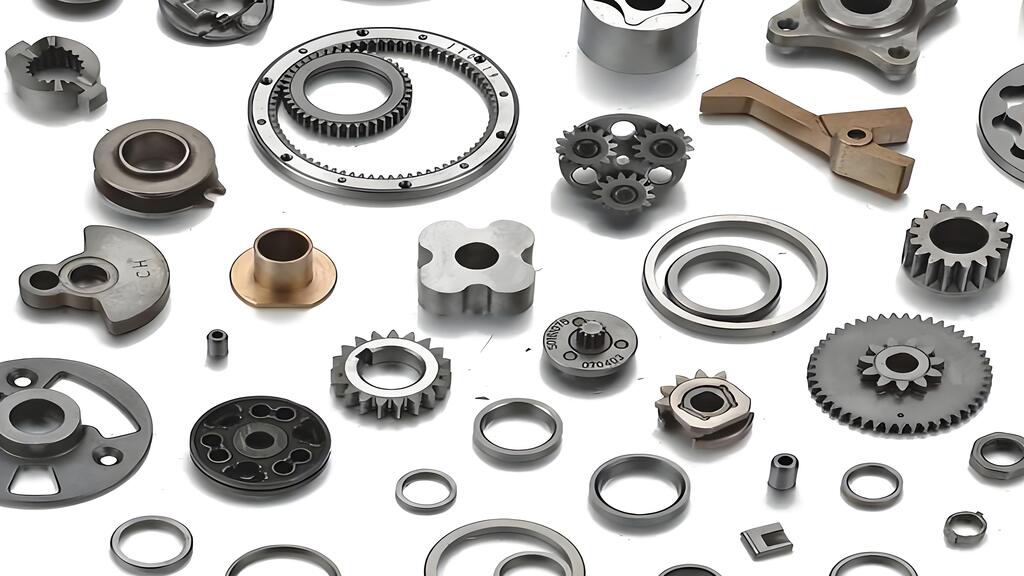


How Steam Process Enhances Powder Metal Parts: Engineering Guide

The steam process revolutionizes powder metal components by creating a protective oxide layer through controlled oxidation that improves their performance by a lot. The treatment heats components to approximately 700°F (370°C) and exposes them to dry steam. This steam reacts with iron to form Fe3O4—a distinctive blue to black oxide that reaches a micro-hardness of approximately 50 on the Rockwell C scale.
Steam treatment brings several engineering benefits to Powder Metallurgy applications. The oxide seals off pores and makes components more compressively strong. On top of that, it creates a protective layer that shields parts from water, chemicals, and oxygen. The oxide's greater hardness leads to better wear resistance and helps retain lubrication. Parts treated with steam also look more attractive with their blue-black surface finish. The process works best in the first half hour, and longer processing times show fewer benefits. Engineers can use these improved properties to create powder metal components that last longer and perform better.
How the Hot Steam Process Alters PM Microstructure
The molecular level changes happen during hot steam treatment of powder metal components. These changes create measurable differences that boost their functional properties. The process depends on controlled oxidation to modify both surface features and internal structure.
Oxide Layer Thickness: 5–7 Microns
Steam treatment of ferrous Pm components at temperatures between 480°C-593°C (900°F-1100°F) creates a controlled reaction on the metal surface. The iron reacts with steam to form magnetite (Fe3O4) and creates a distinctive blue-black oxide layer. The component surface shows this oxide layer at 5-7 micrometers thick. Some sources mention the typical steam treat layer ranges from 0.0001" to 0.0002". Magnetite formation reaches its best rate at about 1000°F. The water vapor in steam turns the iron efficiently at this temperature. The process time changes based on its use—30 minutes helps improve corrosion resistance or hardness, while sealing needs about 60 minutes of exposure.
Compressive Stress Induction and Brittleness
PM components see fundamental changes in their mechanical properties from oxide formation. The material develops compressive stresses as magnetite fills the porous network. The component gets stronger as oxide plugs the pores, but this makes it more brittle, too. Tests show that impact strength drops by 25-50% after steam treatment. The oxide itself has a micro-hardness of about 50 on the Rockwell C scale, which adds to its wear resistance benefits.
No Dimensional Change Except Surface Layer
Steam treatment stands out because it barely changes component dimensions. Parts keep their original size except where oxide forms on the surface. Each surface gains about 5-7 micrometers from oxide growth. This creates an extra layer instead of changing the base material's size. Applications that need tight tolerances benefit from this feature while getting better properties from the oxide layer. The oxide fills the connected pores typical of powder metal components. This boosts effective density but keeps the dimensions stable.
Design Considerations for Steam-Treated Components

Engineers who work with powder metallurgy need to consider several critical factors as they design components for steam treatment to maximize benefits and manage limitations. Material properties, application requirements, and mating surfaces must be assessed to implement this successfully.
Surface Roughness and Abrasiveness of Fe3O4
The magnetite (Fe3O4) surface layer created during steam treatment has a hardness of approximately HRC 50. This layer's wear resistance properties offer benefits, but they can become problematic without proper management. The magnetite surface layer might show abrasiveness if the original surface finish has certain roughness levels. Mating components need careful attention. To cite an instance, a gear profile with magnetite oxide that interacts with a softer, untreated gear profile in sliding and rolling contact could cause excessive wear on the untreated component. Designers must assess how steam-treated parts will mate with other materials to maintain application performance.
Compatibility with Hardened and Tempered Parts
Steam treatment works at temperatures between 510°C and 570°C (950°F and 1060°F), making it suitable for previously hardened and tempered steel components. The temperature range needs to align with prior heat treatment specifications to avoid collateral material property changes. Engineers should discuss specific part requirements with powder metallurgy suppliers to determine the right steam treatment processing parameters.
Impact on Impact Strength: 25–50% Reduction
The most important design aspect relates to mechanical property changes. Steam treatment boosts surface hardness and compressive strength, but it reduces tensile strength and ductility by 10-20% based on steel composition and processing conditions. The magnetite oxide that plugs powder metal pores creates compressive stresses and increases brittleness. This leads to impact strength reductions of 25% to 50% after treatment. Applications that need high impact resistance might require alternative treatments or design modifications.
Carbon Content Range for Optimal Results (0.5–0.8%)
Steam treatment's effectiveness varies with material composition. Research shows the process works best on parts with carbon content between 0.5% and 0.8%. The magnetite layer might form less consistently or show reduced performance characteristics outside this range. Material selection becomes crucial when steam treatment is planned for powder metal components.
Real-World Applications and Case Study Insights

Steam treatment shows clear benefits in industrial settings through practical applications. Real-life testing confirms theoretical advantages and reveals subtle performance characteristics in operational environments.
Hydraulic Pump Ring and Slipper Example
A hydraulic pump application for a hydrostatic geared transaxle used an original 6.7 g/cm³ density powder metal ring housing that experienced excessive pressure bleed-off. Engineers had to choose between resin impregnation or steam treatment. Both solutions improved function at first, but steam treatment was nowhere near as expensive. The biggest problem arose when piston slippers potentially contacted the magnetite layer during low-pressure start-up, which risked surface scratches or gouges on critical components.
Efficiency Gains from Dual-Surface Treatment
Steam treatment applied to both the ring and slippers produced better results than treating the ring alone. The transaxle efficiency jumped by 40% compared to the original prototype with untreated parts. This significant improvement led to immediate production approval. The dual-surface treatment created complementary wear surfaces that reduced original damage and maintained system integrity throughout operation cycles.
Break-in Polishing Effect of Magnetite Layer
The sort of thing I love is how the high hydraulic oil pressure between components created an unexpected benefit. The oxide layer developed a glass-like polish after the original break-in period. The system resolved start-up damage and efficiency concerns completely after this phase. System performance kept improving as the magnetite surface embedded oxides into an increasingly mirror-like surface.
Plastic Gear Wear vs PM Gear Density
Density plays a crucial role in gear applications' wear performance. A 6.3 g/cm³ density steam-treated pinion wore out the plastic component faster when it engaged with a plastic gear. The similar steam-treated gear at 7.0 g/cm³ density showed no measurable degradation of the plastic gear. This shows how material density changes the interaction between steam-treated surfaces and mating components.
Integrating Steam Treatment into PM Production

Steam treatment gives manufacturers practical advantages in their production flows without major equipment changes. The right decisions come from knowing where to integrate the process, what equipment to use, and how the economics work out.
Tooling and Design Adjustments: Usually Not Required
Steam treatment is special because it works at low temperatures and causes minimal distortion, so you won't need to change your tooling. Your existing powder metal components can go through steam treatment without any design changes. Manufacturers can make their products better without spending money on redesigns or waiting for new validations. The steam process just adds a thin oxide layer that doesn't change the component's base dimensions.
Post-Treatment Options: Oil Dips and Rust Prevention
Parts need a few extra finishing steps after steam treatment to work better. Most manufacturers use oil dips or rust preventatives. These treatments make the blue/black finish look better and help fight corrosion more effectively. The magnetite layer works better with these post-treatments because they fill tiny pores that oxidation didn't seal completely. Parts cool down naturally after they leave the steam unit. The secondary treatments create multiple layers of protection.
When to Choose Steam Over Resin Impregnation
Money often decides whether you pick steam treatment or go with options like resin impregnation. Steam treatment costs just 30% of what you'd pay for plastic impregnation and only 15% of copper infiltration. Steam treatment does more than save money - it makes surfaces harder, with magnetite reaching HRC 50 hardness. Parts with density between 5.4-7.0 g/cm³ (68-89% theoretical density) get the best results. Parts denser than 7.0 g/cm³ mainly get better corrosion resistance, but mechanical properties don't change much.
Cost and Throughput Benefits of Continuous Furnaces
Continuous furnace systems make economic sense for high-volume production. They cost less per piece than batch processing. Production rates go up whether you run them indexed or continuously. Mesh belt furnaces give results you can count on while using less energy and staying up and running longer. These systems can handle multiple jobs - washing, quenching, tempering, and steam treatment - all in one production line.
Conclusion
Steam treatment changes powder metal components through a process that boosts part performance with controlled oxidation. The technique creates a protective Fe3O4 layer that makes parts much more resistant to corrosion. The surface hardness also increases to about 50 on the Rockwell C scale.
The manufacturing process keeps components dimensionally stable, with just a 5-7 micron oxide layer added. Engineers should think over some trade-offs, though. The treatment makes parts 25-50% less impact-resistant and more brittle. These drawbacks aside, the process brings great benefits for the right applications, particularly with materials that contain 0.5-0.8% carbon.
Ground examples show how well steam treatment works. A hydraulic pump became 40% more efficient after treatment, and its magnetite layer developed a smooth, glass-like finish during break-in. The right density choice plays a crucial role, too. One gear application showed how density directly affected how well parts wore against matching components.
Production teams love steam treatment. They don't need to change designs or tools. It costs just 30% of what plastic impregnation does. The process fits naturally into continuous manufacturing lines. These benefits make steam treatment an affordable way to boost powder metal components without major design changes.
Steam treatment gives engineers a great way to get better performance from powder metal parts. It won't work for every case because it affects brittleness. But when used right, it delivers exceptional results. Engineers who understand what it can and can't do make better choices that boost component performance and keep production running smoothly.
Key Takeaways
Steam treatment transforms powder metal components through controlled oxidation, creating a protective Fe3O4 layer that delivers measurable performance improvements for industrial applications.
• Steam treatment creates a 5-7 micron magnetite oxide layer with HRC 50 hardness, significantly improving corrosion resistance and wear properties
• The process reduces impact strength by 25-50% while maintaining dimensional stability, making material selection critical for high-impact applications
• Optimal results occur with carbon content between 0.5-0.8% and component density of 5.4-7.0 g/cm³ for maximum effectiveness
• Real-world applications show efficiency gains up to 40%, with the oxide layer developing a beneficial glass-like finish during break-in periods
• Steam treatment costs only 30% of plastic impregnation alternatives and requires no tooling modifications, enabling seamless production integration
The process proves most valuable for applications prioritizing corrosion resistance and surface hardness over impact strength. Engineers should evaluate mating component compatibility and consider dual-surface treatment for optimal system performance in demanding applications.
FAQs
Q1. What is steam treatment in powder metallurgy? Steam treatment is a process that enhances powder metal components by creating a protective oxide layer through controlled oxidation. It involves exposing parts to dry steam at high temperatures, resulting in improved corrosion resistance, wear resistance, and surface hardness.
Q2. How does steam treatment affect the properties of powder metal parts? Steam treatment increases surface hardness and compressive strength but reduces impact strength by 25-50%. It creates a 5-7 micron thick magnetite layer with a hardness of about 50 on the Rockwell C scale, improving wear resistance and corrosion protection while maintaining dimensional stability.
Q3. What are the key design considerations for steam-treated components? Engineers should consider the abrasiveness of the oxide layer, compatibility with mating components, reduced impact strength, and optimal carbon content (0.5-0.8%). It's crucial to evaluate material properties and application requirements to maximize benefits while managing limitations.
Q4. How does steam treatment compare to other surface treatments for powder metal parts? Steam treatment is more cost-effective than alternatives like resin impregnation or copper infiltration, costing only about 30% of plastic impregnation. It doesn't require tooling modifications and can be easily integrated into existing production lines, making it an economical choice for enhancing component performance.
Q5. What density range is optimal for steam-treated powder metal components? The optimal density range for steam-treated powder metal components is between 5.4-7.0 g/cm³ (68-89% theoretical density). Within this range, steam treatment provides the most significant improvements in mechanical properties and corrosion resistance. For components exceeding 7.0 g/cm³ density, the treatment primarily enhances corrosion resistance.