

How Oil-Impregnated Bearings Work
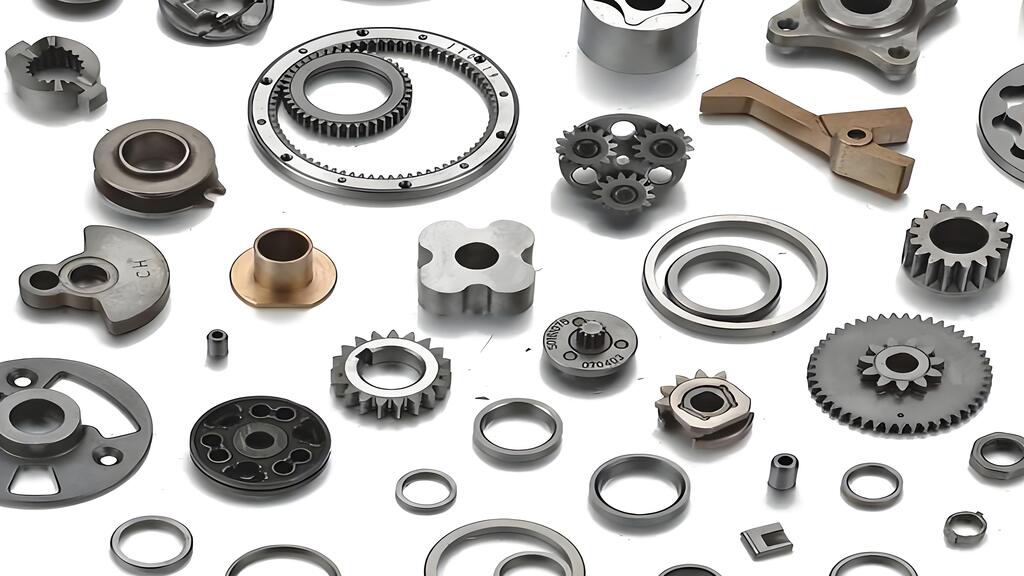
Oil-Impregnated Bearings provide continuous lubrication. They achieve this by releasing oil from their unique porous structure during operation. This self-lubricating mechanism ensures consistent performance without external intervention. Industrial machinery accounts for approximately 35% of the 2024 revenue for sintered Oil-Impregnated Bearings. These components are crucial in applications like pumps, compressors, and conveyors, offering reliability and maintenance-free operation.
Key Takeaways
- Oil-impregnated bearings lubricate themselves. They release oil from tiny holes during use.
- These bearings are made using metal powders. This process creates a sponge-like structure that holds oil.
- Heat from friction pushes oil out. When the bearing cools, the oil goes back inside. This keeps the bearing working smoothly.
- Oil-impregnated bearings need less care. They last longer and save money because they oil themselves.
- They make machines run quietly. The oil helps stop shaking and reduces noise.
- You can find these bearings in many items. They are in home appliances, office machines, and car parts.
- These bearings are simpler than ball bearings. They cost less but cannot carry very heavy loads.
How Oil-Impregnated Bearings Lubricate
Porous Structure and Oil Impregnation
Powder Metallurgy Process
Manufacturers create the unique porous structure of Oil-Impregnated Bearings through a process called Powder Metallurgy. This method begins with fine metal powders, often bronze or iron. Workers compact these powders under high pressure into a specific shape, forming a "green" compact. Next, they heat this compact in a controlled atmosphere at temperatures below the metal's melting point. Thissintering process fuses the powder particles. It creates a solid, yet highly porous, material with interconnected voids throughout its structure. The size and distribution of these pores are critical for effective lubrication.
Vacuum Oil Saturation
After Sintering, the porous bearing undergoes vacuum oil saturation. This crucial step fills the interconnected pores with a carefully selected lubricant. First, technicians place the porous bearing in a vacuum chamber. The vacuum removes all air from the internal pores. Then, they introduce lubricating oil into the chamber. The vacuum is released, or atmospheric pressure is applied, which forces the oil deep into every pore. This ensures the bearing material becomes fully saturated with lubricant, creating a reservoir of oil ready for release during operation.
Capillary Action and Thermal Release
Oil Flow to Bearing Surface
During operation, the bearing generates heat due to friction. This thermal expansion causes the oil within the pores to expand and release onto the bearing surface. Simultaneously, a powerful mechanism known as capillary action actively draws the lubricant to the surface. Oil-impregnated bronze bearings, for instance, contain lightweight oil absorbed into their material. Under optimal conditions, capillary action draws this oil to the bearing surface, forming a lubricating layer between the bearing and the shaft. This built-in capillary system ensures a controlled release of lubricating oil, directly supplying it to the surfaces of rolling elements. Lubricant stored within the pores moves upward by capillary forces, forming a stable lubrication film on the friction surface. This exudation process involves the lubricant rising in the pores and forming droplets on the surface, driven by negative internal pressure during the rise.
Oil Reabsorption Mechanism
The lubrication cycle does not end with oil release. When the bearing cools down or the rotational speed decreases, the oil on the surface is drawn back into the pores. Capillary action facilitates this reabsorption. The porous structure acts like a sponge, pulling the excess oil back into its internal reservoir. This continuous cycle of oil release and reabsorption ensures a consistent supply of lubricant to the bearing surface. It also prevents lubricant loss and maintains the bearing's self-lubricating properties over its lifespan.
Boundary and Hydrodynamic Lubrication
Low Speed Boundary Film
At low speeds or during start-up and shut-down, a full fluid film may not form. In these conditions, Oil-Impregnated Bearings operate under a boundary lubrication regime. The oil forms a thin, molecular layer that adheres to the metal surfaces. This boundary film prevents direct metal-to-metal contact, significantly reducing friction and wear. The lubricant's additives also play a role, forming protective chemical layers on the surfaces.
High Speed Hydrodynamic Film
As the bearing speed increases, a hydrodynamic lubrication regime develops. The rotating shaft drags oil into the converging wedge-shaped gap between the shaft and the bearing surface. This action generates pressure within the oil film. The pressure becomes sufficient to lift the shaft completely off the bearing surface. A full fluid film separates the two components, preventing any metal-to-metal contact. This hydrodynamic film provides extremely low friction and high load-carrying capacity, ensuring smooth and efficient operation.
Manufacturing Oil-Impregnated Bearings
Material Selection for Porosity
Bronze and Other Metals
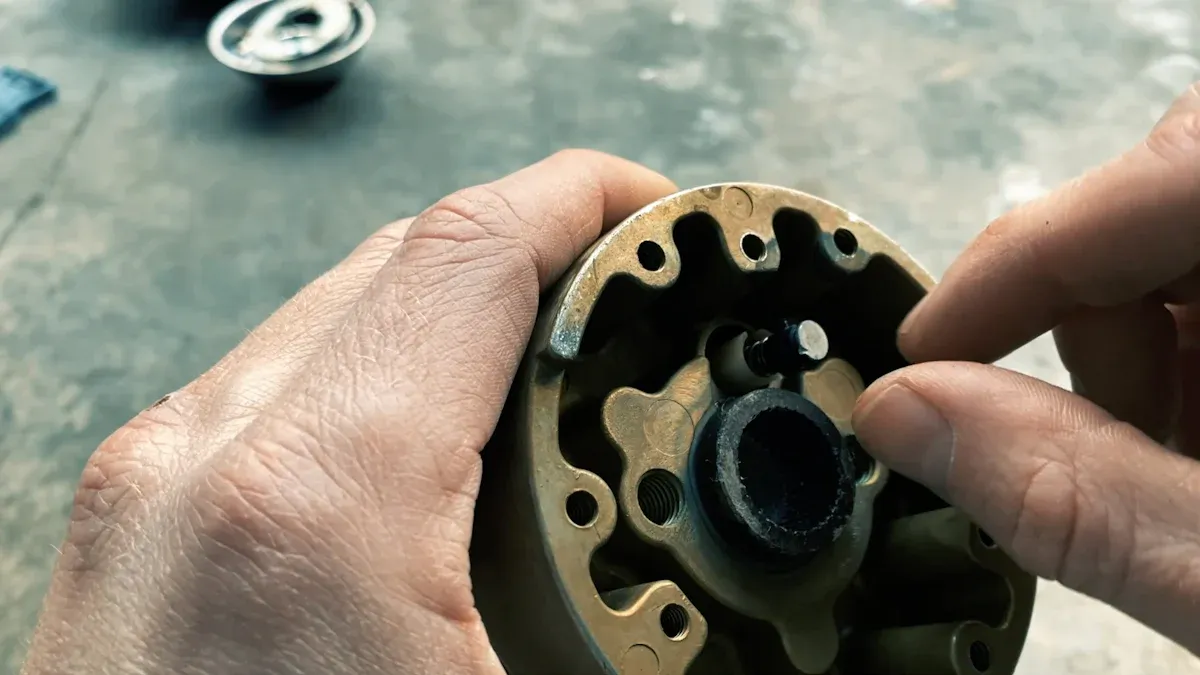
Manufacturers carefully select materials for Oil-Impregnated Bearings to ensure optimal porosity. Bronze is a primary choice for these components. Its suitability for porous structures comes from its manufacturing through powdered metallurgy. This process creates tiny, interconnected pores throughout the bearing's structure. These pores act as reservoirs for lubricant. They facilitate oil flow to the bearing surface when the bearing and shaft move, especially with a slight temperature increase. The oil reabsorbs into the pores when rotation stops. A minimum porosity of 19.0% (oil by volume) is typical for these materials.
Bronze offers several key properties. Its porous structure allows microscopic pores to absorb oil, creating a continuous lubrication film through capillary action. This reduces friction and wear, proving particularly effective in low-load, high-speed applications. Bronze also has good thermal conductivity, which helps dissipate heat. This prevents overheating and potential damage. The material works well with various lubricants, crucial for reducing friction and wear. It maintains structural integrity under high load and stress conditions, ensuring reliable performance. Bronze exhibits excellent wear resistance, extending the lifespan of both the bushing and mating components. It also maintains a low coefficient of friction, reducing energy loss and enhancing machinery efficiency. Proprietary blending and sintering processes create a uniform grain structure and spheroidized porosity in bronze. This results in superior strength, a lower coefficient of friction, and a uniform oil coating on the mating shaft. It also provides excellent wear resistance and long life, especially where normal lubrication is difficult.
Plastic Composites
Beyond metals, plastic composites also find use in oil-impregnated bearings or those designed for oil lubrication. These materials offer distinct advantages. Common types include thermoset phenolics, often combined with fibers like Kevlar®, cotton, jute, or polyester. Fillers such as molybdenum disulfide or graphite enhance their properties. PTFE composites also see use, sometimes including metallic mesh and carbon fiber. Epoxy resin matrices with fiberglass filaments provide another option. Specialty resins incorporating aramid fabrics are also available.
Composite bearing materials offer numerous benefits. They provide corrosion resistance and allow for customizable properties. Many exhibit a low friction coefficient, often being self-lubricating. They possess high load-bearing capabilities and low moisture absorption. These materials often comply with regulatory standards like FDA, RoHS, and REACH. They offer shock resistance and operate across a wide temperature range, from cryogenic to 330°F (165.6°C). Composites are significantly lighter than metals, about one-sixth the weight of steel. They demonstrate durability and toughness, along with good machinability and the ability to hold tight tolerances. Excellent dimensional stability, even when wet, further enhances their appeal.
The Impregnation Process
Filling Pores with Lubricant
After creating the porous bearing structure, the impregnation process fills these pores with lubricant. This crucial step ensures the bearing's self-lubricating capability. Technicians place the porous bearing in a vacuum chamber. The vacuum removes all air from the internal pores. This creates empty spaces ready for the lubricant. Next, they introduce a carefully selected lubricating oil into the chamber. Releasing the vacuum or applying atmospheric pressure then forces the oil deep into every pore. This ensures the bearing material becomes fully saturated with lubricant. The process creates a robust reservoir of oil, ready for release during operation.
Ensuring Oil Content
Achieving and maintaining optimal oil content is vital for the bearing's performance and longevity. The impregnation process uses specific parameters to ensure proper saturation. Vacuum levels for oil impregnation can reach approximately 29" Hg. This high vacuum effectively evacuates air from the pores. Another method involves heating oil impregnation. This process soaks products in hot oil at 80-120°C for about one hour. This combination of vacuum and heat ensures the lubricant penetrates deeply and fills the porous structure. This meticulous process guarantees the bearing holds the necessary oil volume for continuous, reliable lubrication throughout its service life.
Advantages of Oil-Impregnated Bearings
Self-Lubricating Benefits
Reduced Maintenance Needs
Oil-impregnated bearings offer significant advantages in maintenance. Their self-lubricating nature eliminates the need for external oiling or greasing. This reduces labor costs associated with manual lubrication tasks. It also lowers lubricant expenses, as the internal oil reservoir provides a continuous supply. The minimal maintenance requirements lead to reduced equipment downtime, enhancing operational efficiency.
Extended Service Life
The continuous, consistent lubrication provided by these bearings significantly extends their service life. The constant presence of an oil film prevents direct metal-to-metal contact. This reduces wear and friction on components. Oil-impregnated bearings effectively reduce component wear and maintenance needs through their self-lubrication. This design offers reduced wear and friction, ultimately extending equipment lifespan.
Cost-Effectiveness and Efficiency
Lower Initial and Operational Costs
Oil-impregnated bearings present a cost-effective solution. Their initial cost is often competitive. More importantly, they offer substantial savings in operational costs. The elimination of regular lubrication schedules reduces labor expenses. Minimal oil consumption optimizes oil usage, providing an eco-friendly and high-efficiency design. This contributes to lower overall operational expenditures.
Energy Savings
These bearings contribute to notable energy savings. Bronze bushings, commonly used in oil-impregnated bearings, maintain a low coefficient of friction. This characteristic reduces energy loss and enhances overall machinery efficiency. Oil-impregnated bronze bushings create a self-lubricating surface, further reducing friction and wear. Sintered metal bearings, often found in small motors, minimize friction, allowing for smooth operation and contributing to energy conservation.
Noise Reduction and Smooth Operation
Vibration Dampening
The oil film within oil-impregnated bearings acts as a dampening agent. This fluid layer absorbs minor vibrations between moving parts. The porous structure of the bearing material also contributes to this effect. This dampening leads to smoother operation of machinery.
Quiet Performance
Reduced friction directly translates to quieter performance. The continuous oil film prevents metal-on-metal contact, which is a primary source of noise in mechanical systems. This results in a quieter operating environment. Equipment utilizing these bearings often runs with less audible mechanical noise.
Applications of Oil-Impregnated Bearings
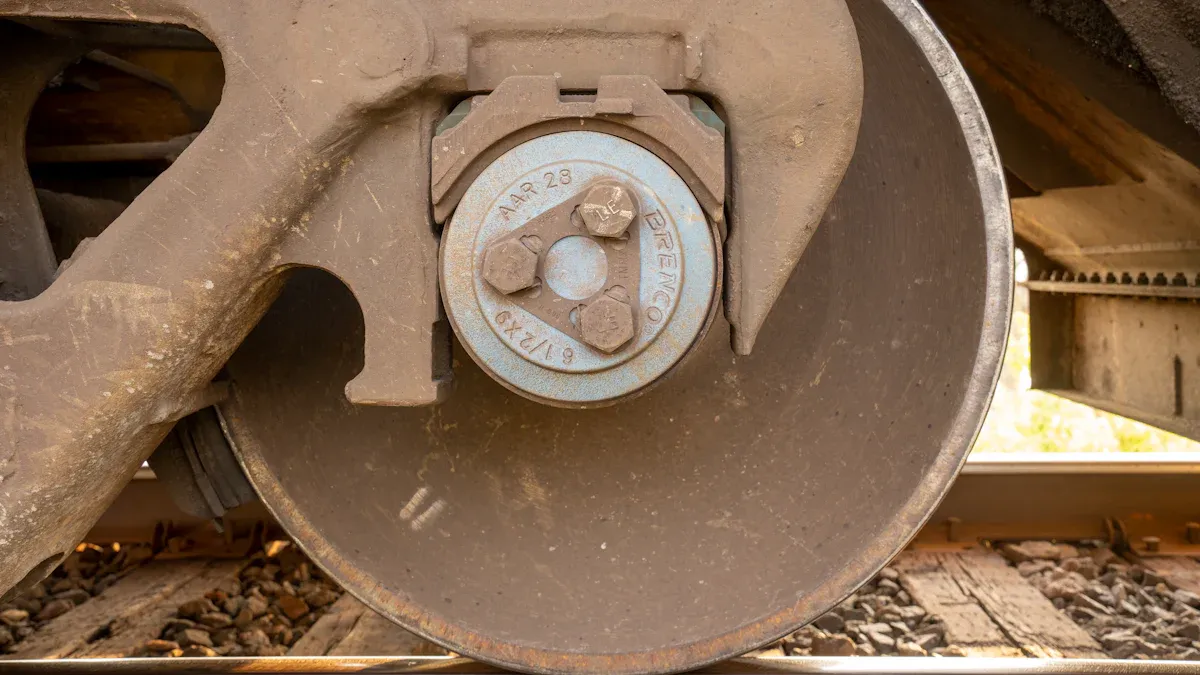
Oil-impregnated bearings find widespread use across numerous industries. Their self-lubricating properties make them ideal for applications requiring minimal maintenance and reliable performance. These bearings contribute to the efficiency and longevity of many mechanical systems.
Consumer Appliances and Electronics
Small Motors and Fans
Many consumer appliances and electronics rely on small electric motors and fans. These components often incorporate sintered metal plain bearings. Manufacturers use these bearings as a reliable and economical solution. They appear in devices such as blenders, vacuum cleaners, and computer cooling fans. The self-lubricating nature of these bearings ensures quiet operation and extended product life. They eliminate the need for users to perform regular lubrication.
Office Equipment Components
Office equipment also benefits from these specialized bearings. Printers, copiers, and paper shredders contain various moving parts. These parts require consistent, maintenance-free lubrication. Sintered bearings provide this essential function. They ensure smooth paper feeding mechanisms and quiet motor operation. This contributes to the overall reliability and user experience of office machinery.
Automotive and Industrial Uses
Vehicle Subsystems
The automotive industry utilizes oil-impregnated bearings in various vehicle subsystems. These bearings appear in components like electric window motors, seat adjusters, and windshield wiper mechanisms. Their ability to operate without external lubrication is crucial in these often inaccessible areas. They provide consistent performance under diverse environmental conditions. This ensures the long-term functionality of critical vehicle features.
Light Industrial Machinery
Light industrial machinery also extensively uses these bearings. Examples include small pumps, conveyors, and textile machinery. These applications often demand continuous operation with minimal downtime. The self-lubricating design of these bearings reduces maintenance intervals. This enhances productivity and lowers operational costs. Their robust construction also allows them to withstand the rigors of industrial environments.
Handling and Maintenance of Oil-Impregnated Bearings
Proper Storage and Installation
Preventing Contamination
Proper handling of bearings begins with careful storage. Manufacturers store these components in clean, dry environments. This prevents exposure to dust, dirt, and moisture. Contaminants can compromise the porous structure and the lubricant within. Before installation, workers ensure the bearing is free from grit and dust. They also remove all sharp edges from the housing and mating shaft. This meticulous preparation safeguards the bearing's integrity and performance.
Press Fitting Techniques
Correct installation methods are crucial for bearing longevity. Installers use a shoulder arbor plug inserted into an arbor press for proper press fitting. A chamfer in the housing bore is essential. This guides the bearing during insertion. An unchamfered edge can shear metal from the bearing's outer diameter, severely reducing the press fit. The outer diameter chamfer on the bearing's lead edge acts as a pilot during installation. The inner diameter chamfer in the bearing serves as a guide when workers insert the shaft. Any out-of-roundness condition will correct when the bearing is pressed into the housing.
Re-oiling Considerations
When and How to Re-oil
Bearings typically do not require re-oiling during their service life. However, if the bearing loses oil during storage or after machining, re-oiling becomes necessary. To re-oil, immerse the bearings in high-quality mineral oil (SAE 30) at 140-160 degrees F (60-71°C) for 10-15 minutes. Then, cool them in cold oil. For a more thorough re-oiling, immerse the bearing in warm oil and apply a cyclic vacuum. This process pulls air out of the bearing. Atmospheric pressure then pushes the warm oil in. Heating both the oil and the bearing is beneficial. It reduces the oil's viscosity and surface tension, facilitating better penetration into the bearing's pores.
Recommended Lubricants
Selecting the correct lubricant for re-oiling is vital. Oil and grease are generally not compatible. A bearing lubricated with one cannot simply switch to the other without thorough cleaning. Even mixing lubricants of the same type but with different viscosities can negatively impact performance. For general linear bearings, manufacturers typically provide detailed lubrication guidelines. These include recommended types, quantities, and intervals. Always consult these guidelines. Common choices for re-oiling include SAE 30 oil. High-temperature silicone oil has also been used successfully for bronze bearings in high-heat applications, such as those found in a bread maker, enduring temperatures up to 300°C.
Oil-Impregnated Bearings Compared to Other Types
Versus Ball Bearings
Simplicity and Load Capacity
Oil-impregnated bearings offer a simpler design compared to ball bearings. They consist of a single porous component, eliminating the need for multiple rolling elements, cages, and races. This simplicity often translates to easier manufacturing and installation. However, this design difference impacts their load capacity. Oilite bearings, a common type of oil-impregnated bearing, are not designed to handle huge loads. Rolling bearings, such as needle bearings, are capable of doing so. Oilite bearings are prone to breaking under high stress conditions. For example, a 1-3/4 OD x 1 wide Oilite bearing handles approximately 3000 pounds. In contrast, a 954 Aluminum Bronze bearing of the same size manages about 6500 pounds, and a needle bearing handles 11,300 pounds.
Cost and Maintenance
Oil-impregnated bearings generally present a more cost-effective solution than ball bearings. They offer the lowest initial Bill of Materials (BOM) cost. This makes them suitable for cost-sensitive applications. Ball bearings fall into a mid-range cost category. They are typically more expensive than sleeve bearings but less costly than Fluid Dynamic Bearings (FDBs). This cost advantage extends to maintenance. Oil-impregnated bearings require no external lubrication, reducing labor and material costs associated with upkeep.
Versus Plain Bearings
Self-Lubrication Advantage
Oil-impregnated bearings possess a significant advantage over traditional plain bearings: self-lubrication. They eliminate the need for external lubricants. This provides versatility in various industrial applications. This self-lubricating feature offers numerous benefits. It reduces maintenance and labor costs. It also increases equipment service life. The continuous lubrication minimizes friction and wear, enhancing productivity and reducing downtime. This makes operations more environmentally friendly and saves money.
Wear Characteristics
The wear characteristics of oil-impregnated bearings differ significantly from non-impregnated plain bearings. Oil-impregnated bearings are self-lubricating. They have oil embedded in their porous structure. This reduces friction and wear, increasing durability and longevity. They are suitable for lower load and speed applications, requiring less frequent maintenance. Conversely, non-impregnated plain bearings, like cast bronze bushings, require regular external lubrication to manage wear effectively. They are often used in high-load and speed applications.
| Feature | Oil-Impregnated Bearings | Non-Impregnated Plain Bearings (Cast Bronze Bushings) |
|---|---|---|
| Lubrication | Self-lubricating (oil embedded in porous structure) | Requires external and regular lubrication |
| Maintenance | Low-maintenance solution | Necessitates regular lubrication maintenance |
| Wear Characteristics | Reduced friction and wear, increased durability and longevity | Requires consistent external lubrication to manage wear |
| Suitable Applications | Lower load and speed, less frequent maintenance (e.g., small electrical devices) | High load and speed (e.g., industrial machinery) |
These bearings provide a reliable, low-maintenance, and cost-effective lubrication solution. Their unique self-oiling design makes them indispensable across diverse applications. This design eliminates the need for external lubrication. Understanding their intricate mechanism ensures optimal selection and performance in various systems. Engineers can achieve long-lasting, efficient operation by choosing the right bearing type.
FAQ
What is an oil-impregnated bearing?
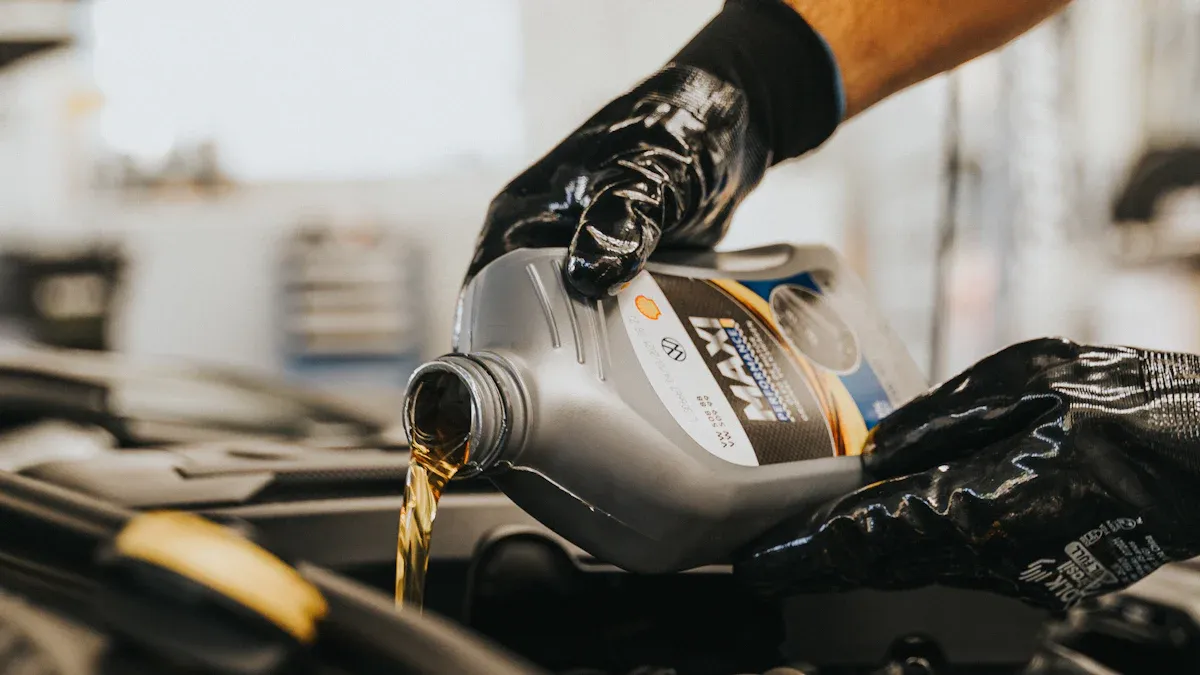
An oil-impregnated bearing is a porous component. It contains lubricant within its structure. Manufacturers create it through powder metallurgy. This design allows for continuous self-lubrication during operation.
How does self-lubrication work?
The bearing's porous structure holds oil. Heat from friction causes the oil to expand and release onto the surface. Capillary action also draws oil out. When the bearing cools, capillary action reabsorbs the oil. This creates a continuous lubrication cycle.
What materials are used for these bearings?
Manufacturers primarily use bronze for its porosity. They also use other metals. Plastic composites, such as thermoset phenolics or PTFE composites, offer alternative options. Material selection depends on specific application requirements.
What are the main advantages of oil-impregnated bearings?
These bearings offer several benefits. They provide self-lubrication, reducing maintenance needs. They extend service life and offer cost-effectiveness. They also contribute to energy savings and quieter operation.
Can you re-oil an oil-impregnated bearing?
Yes, you can re-oil them if they lose lubricant. Immerse the bearing in warm, high-quality mineral oil. A cyclic vacuum process can ensure deeper penetration. Always use recommended lubricants.
Where do people commonly use oil-impregnated bearings?
They are common in consumer appliances like small motors and fans. Office equipment also uses them. In the automotive industry, they appear in vehicle subsystems. Light industrial machinery also benefits from their use.
How do oil-impregnated bearings differ from ball bearings?
Oil-impregnated bearings have a simpler design. They are generally more cost-effective. However, ball bearings typically handle much higher loads. Oil-impregnated bearings require no external maintenance.